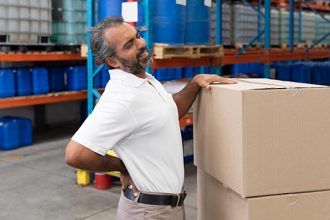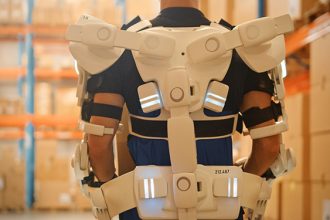

Although automation helps improve safety in material handling workplaces, humans are still essential in these environments. Overlooking their involvement creates safety risks—especially around ergonomics. A recent article in MHI Solutions magazine delved into the importance of focusing on proper ergonomic care and the oversight necessary to reduce these risks.
For the piece, author Tom Gresham spoke in-depth with Kelly Wehner, President of BOSTONtec. Wehner’s company is a member of the Ergonomic Assist Systems and Equipment (EASE) Council. She currently serves as EASE Council chair.
“We know that it’s difficult to find talent today, so we have to keep the talent that we have as safe as we can,” explained Wehner.
Misconceptions Surrounding Automation and Ergonomics
Wehner said EASE Council members strive to correct the misperception that introducing automation to an environment means that an organization can relax its focus on ergonomics.
“There’s the thought that we can make everything safe if we automate,” she observed. “But it is not always possible to automate every part of the process. Part of our messaging is that automation and ergonomics need to work hand-in-hand.”
OSHA has found musculoskeletal injuries to be among the most frequent workplace injuries. Causes include sprains and strains resulting from ergonomic‑related motions. OSHA notes that automation can help to reduce some of the repetitive tasks that lead to ergonomic injuries from manual labor. However, it also cautions that poorly implemented automation can create new ergonomic risks. For example, by introducing a different set of repetitive motions.
“Automation could potentially create a negative safety situation,” Wehner said. “So how do we make sure that through ergonomics, with people engaged, we are setting that up so that we are taking that out of the mix? We need to make sure that we are leveraging both tools of ergonomics and automation for the best safety environment that we can for employees.”
Matching the Task to the Worker
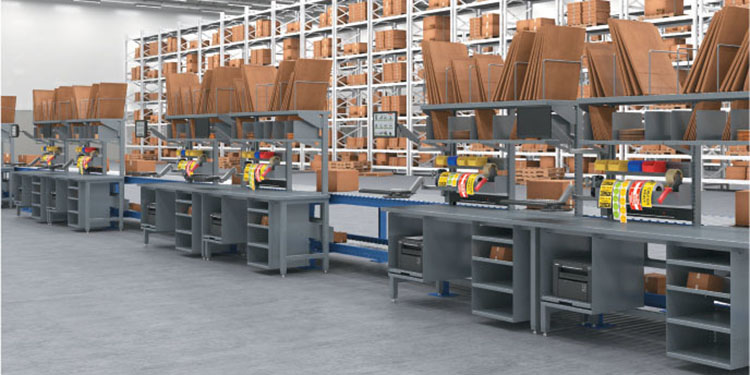
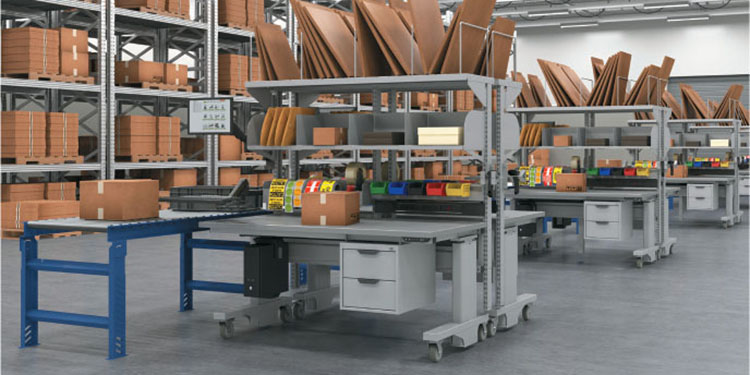
As an example, Wehner pointed to a hypothetical internet fulfillment operation that features automation tools, such as a conveyor. Typically, conveyors that carry packages in these environments have a stopping point on the line where a human interacts with the transported items.
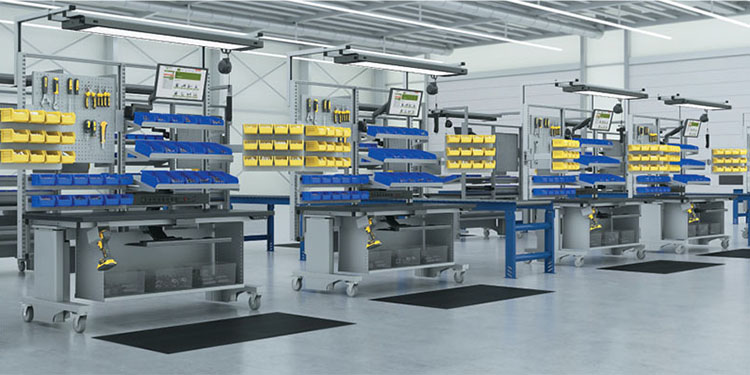
If the conveyor or worker’s workstation is at a fixed height, then it is not an “ergonomically sound” approach to the process for the workers, Wehner said. That’s because workers are likely to all be different heights. If the conveyor or workstation cannot move up and down easily to match the height and reach zone of each worker, then those workers inevitably will use suboptimal repetitive motions for long periods. That, she noted, can lead to injuries.
“If we can’t align automation with that human interaction through whatever that piece of equipment is, then we lose,” Wehner said. “When automation is being planned, we have to make sure that if there’s something that is not automated within that flow, we have a solution for it.”
Leaders Must Prioritize Automation and Ergonomics Together
Among the keys to a successful marriage of automation and ergonomics is leadership that emphasizes it, advised Wehner.
“The leadership of an organization from the top down has to send the message that our people are the most valued aspect of our organization. They have to make sure that they do the right thing and keep people safe in whatever operation they are performing,” she said. “Once that mindset is institutionalized, anytime you go into a project, whether it’s automated or not, there needs to be a job assessment done about what are the ergonomic aspects of this particular operation.”
Wehner said the EASE Council is working to develop an EASE 101 tool that will help organizations better understand ergonomics. The resource will detail the benefits of ergonomics and the risks of not considering ergonomics in their environments. It also explores how ergonomics fits into a variety of environments, including automated ones. Ultimately, the publication is intended to help organizations see how to apply ergonomics within their facilities. The EASE Council also plans to share focused excerpts of the resource in shorter, more digestible formats, Wehner said.
EASE Council Members Committed to Innovation
Wehner said EASE Council members are keenly aware of ongoing developments in automation, making sure that the products they provide keep up with the changing ergonomic needs of the workers who tend to those new tools. She noted that ergonomics solutions themselves are growing more automated. This is “making it simpler, more efficient and more effective for ergonomics to be applied within an environment,” she added.
“More innovation is coming. We in EASE understand that automation will continue to move forward, and ergonomics will walk alongside to support where a human being is going to be in any of those environments,” Wehner said.
To learn more about the EASE Council, visit mhi.org/ease.