
Ergonomics 101: The EASE Council’s New Guide to Improving Safety and Productivity in Industrial Operations
The physical demands placed on workers in manufacturing, warehousing, packaging, and logistics continue to rise. At the same time, labor shortages make it harder for companies to staff operations adequately, heightening the strain on existing employees. Indeed, many report that poor ergonomics—associated with physical fatigue and manual handling demands—contribute directly to lower throughput and higher turnover.
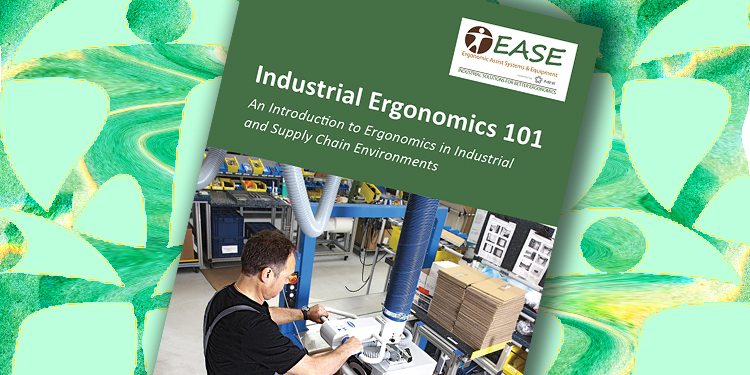
To help operations address these challenges, the Ergonomic Assist Systems & Equipment (EASE) Council has released “Industrial Ergonomics 101: An Introduction to Ergonomics in Industrial and Supply Chain Environments.” The new educational publication gives organizations a clear, practical introduction to ergonomic principles.
“Ergonomics is the design of work systems around the capabilities and limitations of people,” said Kelly Wehner, President of BOSTONtec, an EASE Council member. Wehner also serves as Chair of the group. “When companies apply ergonomic principles, they reduce strain, improve comfort, and protect workers. Further, they can unlock significant productivity gains.”
The new guide reflects the expertise of EASE Council member companies, who collaborate across the material handling industry to promote safer and more efficient workplaces, added Megan Baker, Director of Marketing at UNEX, also an EASE Council member. She led the team that developed the publication’s content.
“‘Industrial Ergonomics 101’ explains how improving material handling methods, tools, and task design can reduce injury risk, create safer workflows, and enhance employee productivity,” Baker explained. “The EASE Council developed this publication to provide accessible, foundational ergonomics information to help organizations understand, apply, and benefit from proven best practices.”
What Industrial Ergonomics Really Means for Operations
 Many organizations associate ergonomics only with injury prevention. However, the EASE Council’s new publication underscores a broader definition. It emphasizes how ergonomics improves the interaction between workers, tasks, and equipment. It focuses on reducing unnecessary exertion, awkward postures, repetitive motions, and environmental stressors. All of which directly impact throughput, quality, and worker retention, noted Wehner.
“Industrial ergonomics isn’t just about preventing musculoskeletal disorders,” she explained. “It’s about designing work so employees can perform tasks with less effort and more efficiency.”
In “Industrial Ergonomics 101,” the EASE Council breaks down ergonomics into eight core components that industrial teams can evaluate in their current operations. They include workstation design, tools and equipment, material handling, task design, work environment, safety, ergonomic assessments, and training. Each represents an opportunity to reduce strain and increase output without adding headcount.
Where Ergonomics Delivers the Greatest Impact
“Industrial Ergonomics 101” details how ergonomics improves performance across manufacturing, assembly, warehousing, packaging, shipping, maintenance, and quality control. These areas typically demand repetitive motion, bending, lifting, carrying, pushing, or precision work. The guide explains how such tasks become slower and more fatiguing when ergonomics are lacking.
In production lines and assembly areas, ergonomically designed workstations and better tool placement reduce repetitive motions that lead to musculoskeletal disorders. “When workers aren’t fighting awkward postures or reaching for tools, they perform tasks more quickly and accurately,” said Baker.
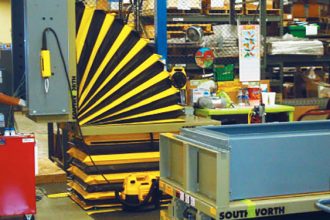
In warehousing and material handling operations, mechanical aids such as lifts, conveyors, carts, and pallet jacks reduce manual carrying. They also help workers avoid excessive bending and twisting. Likewise, optimized storage layouts shorten travel and retrieval times.
Packaging and sorting areas benefit from height-adjustable tables, ergonomic tools, anti-fatigue matting, and better lighting. These features reduce fatigue and improve accuracy during repetitive or precision tasks.
Shipping, receiving, maintenance, logistics, and quality control teams see similar gains when facilities introduce better workstation setup, access, lighting, tool orientation, and mechanical support.
Across all these environments, ergonomics makes work faster, easier, and safer.
The Measurable Benefits of Better Ergonomics
Although improving ergonomics requires thoughtful evaluation and investment, the long-term gains are significant. As highlighted in “Industrial Ergonomics 101,” the most substantial benefits include:
Lower Injury Rates
Ergonomically designed work tasks reduce musculoskeletal disorder risks. Among these are back injuries, repetitive strain injuries, and disorders caused by vibration or awkward postures.
Higher Productivity
Workers who experience less discomfort and fatigue maintain higher throughput and better accuracy throughout their shifts.
Enhanced Worker Satisfaction
Ergonomic work environments increase comfort, improve morale, and reduce turnover. In a tight labor market, these advantages can make a big difference in employee attraction and retention efforts.
Cost Savings
Reduced injury rates, fewer missed workdays, lower turnover, and greater efficiency all translate into measurable financial returns.
“Comfortable workers are more productive workers,” emphasized Baker. “Ergonomics is a direct contributor to operational efficiency.”
Practical Steps to Improve Ergonomics Today
The new EASE Council publication also explains how companies can take practical, low-barrier actions to improve ergonomics. Among them are listening to workers, evaluating tasks, and redesigning work areas around natural human movement.
Encouraging worker involvement helps teams identify pain points and ergonomic hazards quickly. Regular ergonomic assessments keep operations responsive as tasks and materials change. Adjustable workstations, better tool placement, proper lighting, ergonomic seating, and floor mats can make a measurable difference in worker comfort.
The guide also emphasizes the value of mechanical aids to reduce manual lifting and awkward handling. These include lifts, hoists, conveyors, carts, tuggers, and work positioners. Task rotation and structured rest breaks help alleviate fatigue from repetitive motions or static postures.
Finally, training ensures that employees use ergonomic equipment and follow best practices consistently. “Education is essential,” added Wehner. “Workers are far more likely to adopt ergonomic solutions when they understand how those solutions help them.”
Access the New Industrial Ergonomics 101 Guide
Industrial ergonomics plays a critical role in supporting a safer, more productive, and more resilient workforce. With “Industrial Ergonomics 101,” the EASE Council provides companies with a clear starting point for evaluating risks, implementing improvements, and strengthening operational performance.
For organizations looking to improve ergonomic safety and efficiency across industrial and supply chain environments, the EASE Council offers extensive expertise. The group offers educational resources, case studies, videos, and seminars on its website.
To download “Industrial Ergonomics 101” and explore additional resources, visit mhi.org/ease.