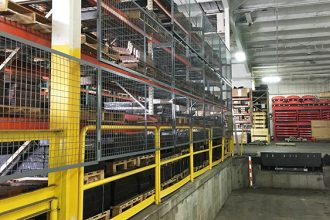

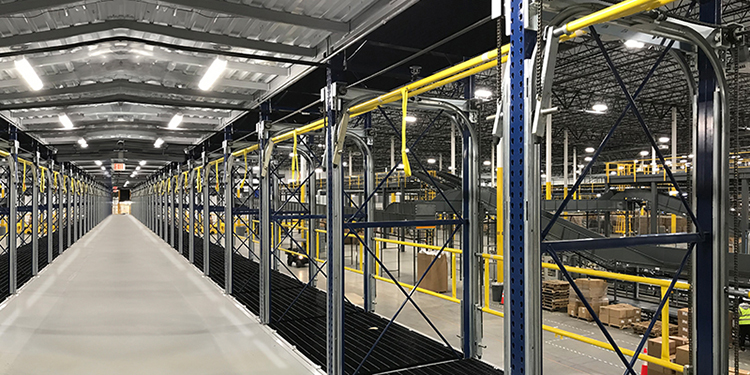
As more facilities add mezzanines, elevated pick modules, or industrial work platforms to maximize available workspace, it’s critical to address fall hazards. To ensure compliance with Occupational Safety and Health Administration (OSHA) regulations about elevated work areas, facility owners should consider engineered, passive fall protection systems. Solutions such as engineered safety gates ensure worker safety while enhancing operational efficiency.
“In applications where pallets or other large materials need to move up to and down from the mezzanine, a safety gate protects workers,” explained Amy Dinkel, Senior Marketing Manager at Garlock Safety Systems. The company is a member of the Protective Guarding Manufacturers Association (ProGMA). “These systems obstruct an opening, but still permit access.”
Under OSHA standard 1910.28(b)(1)(i), employers must provide fall protection on any walking-working surface with an unprotected edge that is 4 feet or more above a lower level. Acceptable protection methods include:
- Guardrail systems.
- Safety net systems.
- Personal fall protection systems, such as fall arrest or fall restraint.
Common Engineered Solutions for Mezzanine Safety
In overhead handling applications, active fall protection systems like harnesses or nets are often impractical, noted Dinkel. “That’s due to the nature of the work and the movement of materials. Also, these systems require specialized training, and their use can interrupt normal operations,” she said.
Further, for operations that move palletized materials to or from a mezzanine—or where employees work in elevated pick zones—fall protection must remain in place at all times. This includes during transfer of the materials.
ProGMA members offer a wide variety of fall protection systems tailored to elevated work environments. The following solutions meet OSHA standards while maintaining material flow.
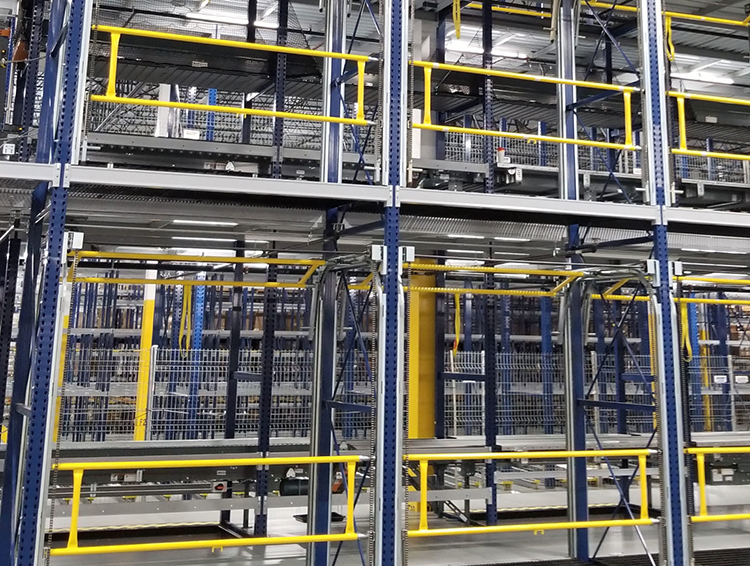
Rack-Mounted Dual Safety Gate Systems
Integrated into pallet racking, these systems feature two interconnected gates. When one gate opens for loading or unloading, the other closes. This safeguards workers from exposure to an open edge.
Floor-Mounted Dual Safety Gate Systems
Ideal for standalone mezzanines or elevated work platforms, these systems offer self-contained fall protection at access points. “Like rack-mounted versions, one gate always remains closed to prevent fall exposure,” explained Dinkel.
Extended-Capacity Safety Gates
For wider pallet openings or deeper mezzanine spaces, extended-capacity gates offer modular sizing. These barriers also provide dual-gate functionality, maintaining OSHA compliance for larger load transfer zones.
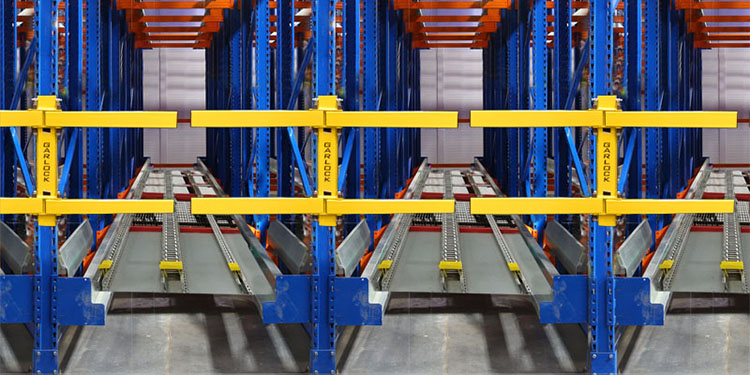
Pallet Flow Safety Gates
These gates integrate with pallet flow lanes and dynamic rack systems, Dinkel noted.
“They are often spring-loaded to self-close and available in single- or double-gate configurations,” she continued. “Most models attach directly to existing rack structures with minimal impact on throughput.”
Modular Guardrail Systems
Freestanding or wall/floor-mounted guardrails provide permanent edge protection. Provided in custom or standard lengths, they often sport a high-visibility safety color finish. These guardrails offer durability and flexibility in protecting elevated platforms, stairways, and walkways.

Build a Safer Elevated Workspace
Ultimately, the most effective mezzanine fall protection strategy is one that check four separate boxes, said Dinkel.
“The optimal solution should either meet or exceed OSHA requirements. It should function passively without user input or effort to ensure employees use it. It must support ongoing material handling operations. Finally, it should easily integrate into an existing facility layout,” she advised.
To learn more about engineered safety gates, guardrail systems, and other solutions to protect workers at heights, visit ProGMA’s Protective Guarding Search Tool. Additionally, ProGMA members are available to offer guidance and recommendations that can help operations be OSHA compliant. Visit mhi.org/progma for more information.