

Ergonomic Packaging and Sorting: Designing Workflows That Improve Performance and Reduce Fatigue
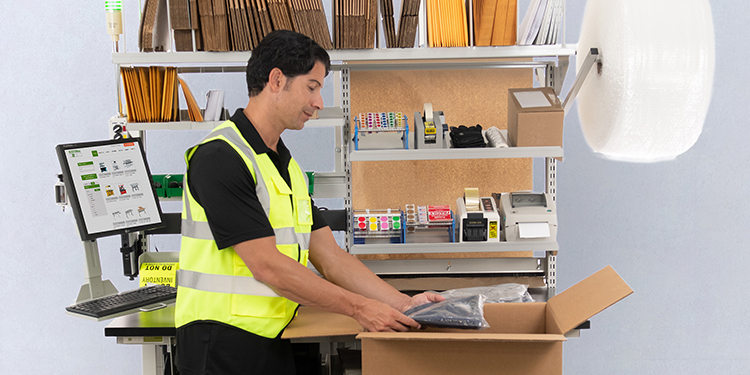
In high-volume fulfillment and distribution environments, ergonomic packaging and sorting is no longer a “nice to have.” It is a critical factor in operational performance. Workers in these areas perform repetitive motions, handle a wide range of product sizes and weights, and must maintain speed and accuracy over long shifts. Without proper ergonomic design, these demands can quickly lead to fatigue, errors, and injuries.
According to the Ergonomic Assist Systems & Equipment (EASE) Council’s Industrial Ergonomics 101 publication, packaging and sorting operations are among the most impactful areas for ergonomic improvement. When thoughtfully designed, these workspaces can significantly enhance efficiency, reduce physical strain, and support consistent, high-quality output.
Why Ergonomics Matters in Packaging and Sorting
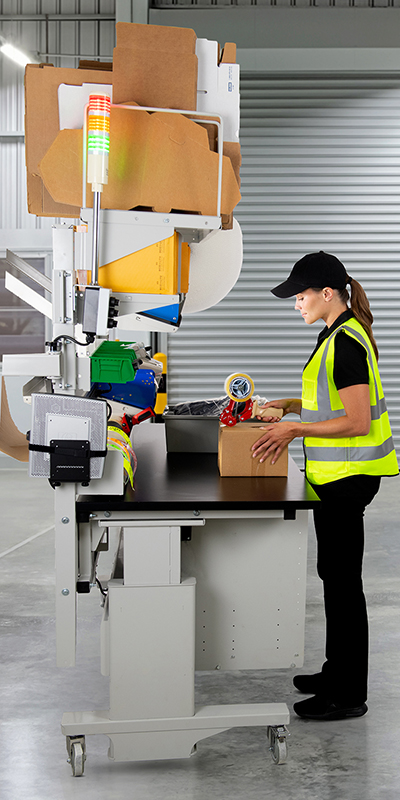 Packaging and sorting tasks combine precision with repetition, two conditions in which poor design quickly becomes costly. Workers may be reaching for materials, bending to access cartons, or twisting to place completed packages. Over time, these motions add up.
“Packaging environments are often built around the process, not the person doing the work,” said Rob Doucette, Senior Application Engineer at BOSTONtec, a member of the EASE Council. “When you flip that approach and design the workstation around the worker, you immediately start to see gains in both productivity and quality.”
In fact, ergonomic improvements directly address three key challenges common in these operations:
- Physical fatigue from repetitive motion.
- Inefficient workflows caused by poor layout.
- Increased risk of musculoskeletal strain and injury.
Designing for Efficiency and Accuracy
One of the primary benefits of ergonomic packaging and sorting is improved task efficiency. When tools, materials, and work surfaces are positioned correctly, workers can complete tasks faster and with fewer unnecessary movements.
The Industrial Ergonomics 101 guide highlights several core principles:
- Keep frequently used items within easy reach.
- Minimize excessive bending, stretching, and twisting.
- Design layouts that support smooth, continuous motion
Doucette emphasized that even small adjustments can make a measurable difference. “We’ve seen situations where a basic, non-optimized setup required workers to take extra steps or movements for every package,” he said. “When those movements are reduced, the time savings—and the reduction in strain—add up very quickly.”
Reducing Fatigue Through Adjustable Workstations
Fatigue is one of the most significant barriers to sustained productivity in packaging and sorting environments. Long periods of standing, combined with repetitive tasks, can lead to discomfort and decreased performance over time.
Adjustable workstations are a key solution. By allowing workers to modify height and positioning based on their individual needs and the task at hand, these systems help maintain neutral postures and reduce physical stress.
“An optimized, height-adjustable workstation isn’t just about comfort—it changes how people work,” said Doucette. “When workers can position the station correctly, they’re not fighting the setup. They can stay focused, work more efficiently, and maintain consistency throughout the shift.”
Supporting Better Posture and Worker Well-Being
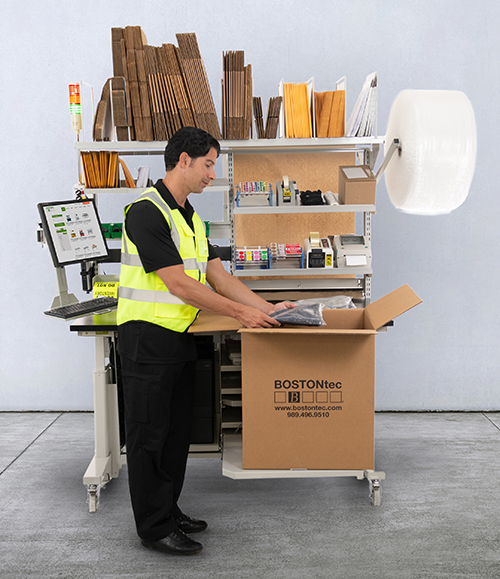 Proper posture is essential for preventing long-term injuries. This is especially true for environments where workers repeat the same motions hundreds or thousands of times per shift. Ergonomic packaging and sorting solutions address this through:
- Adjustable work surfaces that align with the worker’s height.
- Strategic placement of packaging materials and tools.
- Use of anti-fatigue matting to reduce strain from standing.
- Integration of conveyors to minimize manual carrying and lifting.
These elements work together to create a more supportive environment that allows workers to maintain neutral body positions and avoid unnecessary strain.
Proven Impact: From Basic Setups to Optimized Workstations
To better understand the impact of ergonomic design, BOSTONtec conducted an study comparing standard workstations with optimized ergonomic setups. The study simulated both assembly and fulfillment (packaging) tasks, measuring performance before and after the implementation of improvements.
“We set up a very typical scenario—something you might see in a lot of facilities today—and then redesigned it with ergonomics in mind,” Doucette explained. “When workers repeated the same tasks in the optimized setup, productivity increased and quality improved. But just as importantly, they preferred the new environment.”
Turning Ergonomics into a Competitive Advantage
While some organizations still view ergonomics as a compliance requirement, leading operations treat it as a strategic advantage. Well-designed packaging and sorting environments enable workers to perform at a higher level, with less fatigue and fewer errors.
“Companies that invest in ergonomics are really investing in their people,” Doucette said. “When you support workers in doing their jobs well, the operational benefits follow. That is, better throughput, better quality, and a safer workplace.”
As outlined in the EASE Council’s Industrial Ergonomics 101, focusing on ergonomic packaging and sorting is one of the most effective ways to improve both employee well-being and overall system performance. By aligning workstation design with the needs of the worker, organizations can create safer, more efficient operations.
Find More Ergonomics Resources from the EASE Council
Looking to implement ergonomic packaging and sorting in your fulfillment workflows? Connect with the members of the Ergonomic Assist Systems & Equipment (EASE) Council. The association recently published Industrial Ergonomics 101: An Introduction to Ergonomics in Industrial and Supply Chain Environments. Additionally, the EASE Council offers a variety of presentations and seminars, checklists, and ergonomic articles on its website.