
Ergonomic Material Handling and Warehousing Delivers Smarter, Safer Workflows
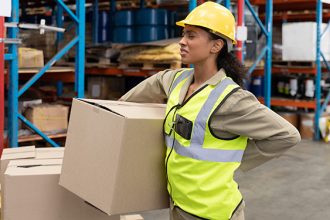
With manual operations at the heart of most supply chains today, workers experience significant physical demands. Repetitive lifting, constant movement, and inefficient layouts can quickly lead to fatigue, injury, and lost productivity. Implementing ergonomic material handling and warehousing practices, however, can deliver a range of benefits across workflows in manufacturing and supply chain operations.
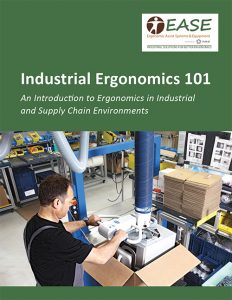 The Ergonomic Assist Systems & Equipment (EASE) Council’s Industrial Ergonomics 101 publication highlights three critical ways to improve ergonomics in these environments. They include:
- Minimizing manual lifting.
- Reducing awkward movements.
- Optimizing storage layouts.
When applied through thoughtful work task design, these ergonomic material handling and warehousing principles improve safety. They also fundamentally reshape how work gets done, said Alex Eder, Director of Handling Systems at Schmalz Inc., and Rob Beightol, Director of Marketing at Gorbel. Both companies are members of the EASE Council.
Here, the pair offers insights into how leading organizations are advancing ergonomics throughout real-world operations.
The Risks Associated with Manual Lifting
Manual lifting remains one of the biggest contributors to workplace injuries in industrial environments. Indeed, Industrial Ergonomics 101 emphasizes that the greatest impact comes from minimizing lifting. That’s because the risks associated with manual lifting are both in the immediate- and long-term, noted Eder.
“When your job requires manual manipulation and movement of heavy objects, there is always an immediate risk of injury,” he explained. “Additionally, the cumulative effect of days, weeks, and years doing these tasks takes a toll.”
Anything that requires a worker to deviate from their natural posture can create strain, continued Eder.
“I personally have Ankylosing Spondylitis. That makes me particularly susceptible to extended reaching, which puts a big strain on the lower back. Things like working above shoulder-level or twisting all put additional stress on your body,” he said.
Eder likened the musculoskeletal system to levers. “When you lift a load near your body, it’s similar to a balanced seesaw. Your muscles are on the left, your lifted load is on the right, and the two are balancing on your skeletal system,” he observed. “If you’re reaching overhead, twisting, or bending, then your muscles and skeletal system have to provide a significant counterforce to hold the weight.”
Common Industrial Workflows That Contribute to Ergonomic Injuries
There are multiple areas and processes throughout operations that are rife with potential for manual lifting related ergonomic injuries, noted Beightol.
“Strains and related injuries may occur in the trailer while handling floor-loaded goods, placing materials on pallets or shelves, and in areas where workers repeatedly handle repack or store goods,” he said.
For example, when unloading a trailer, workers may reach above their shoulders to access packages stacked at ceiling level, traditionally with a step ladder.
“Workers must not only reach the top of stack of packages but also place the goods on a conveyor or related system well below waist level,” Beightol continued. “Reaching high then bending low may negatively impact shoulders, neck, and back at a minimum. Additionally, due to the harsh nature of the motion, some workers will simply drop the goods onto the conveyor. While this may alleviate some bending, the damage to inventory may increase substantially.”
Eventually, he added, workers unloading a trailer will reach packages below waist level. This requires a similar series of motions in reverse. That is, bending down to reach goods, then lifting and placing them on a conveyor or a forklift.
“Many times, twisting the body is necessary as well, as the conveyor may be stationary and not move with the worker to various parts of the trailer,” said Beightol. “The same movements are also frequently seen in putaway, as items are placed on pallets or shelves for storage.”
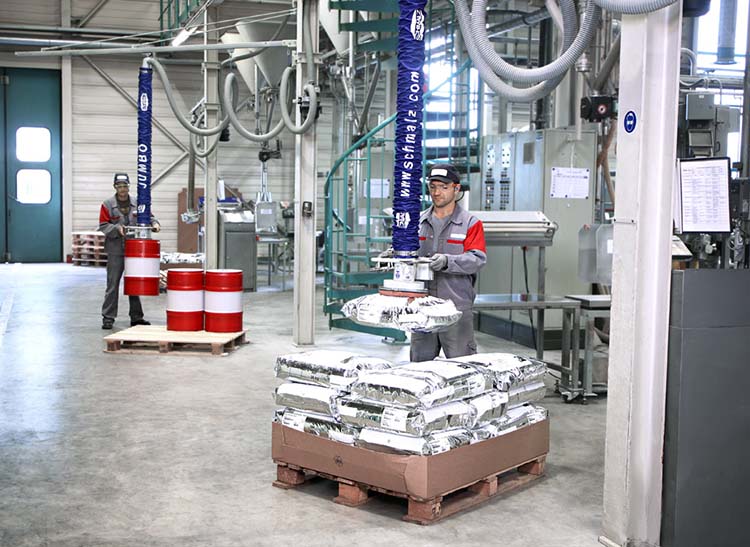
Ergonomic Material Handling and Warehousing Equipment Reduces Strain
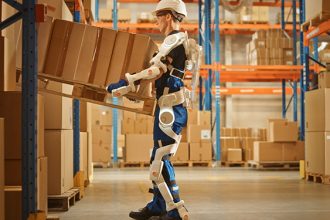
Applying ergonomic lifting equipment severely reduces the risk of the immediate and cumulative injury.
“Anything that bears the weight of the object, moves or manipulates the object, or puts the less ergonomic motions in the power zone for the operator are movements in the right direction,” said Eder. “The power zone is close to the torso and between your thighs and pecs.”
Another ergonomic material handling and warehousing principle to apply is to seek opportunities to minimize travel time and congestion while increasing productivity and material flow.
“This generally involves creating dedicated shipping areas and dedicated receiving areas. From there you want to lay out storage, picking, and packing in between the two. This creates a process flow, minimizing wasted movements and preventing cross traffic,” Eder explained.
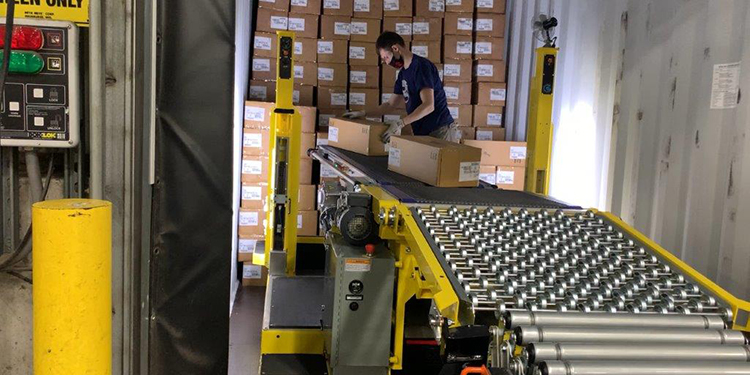
To enhance ergonomics when loading and unloading trailers and shipping containers, Beightol advised utilizing an ergonomic conveyor that works in conjunction with associates.
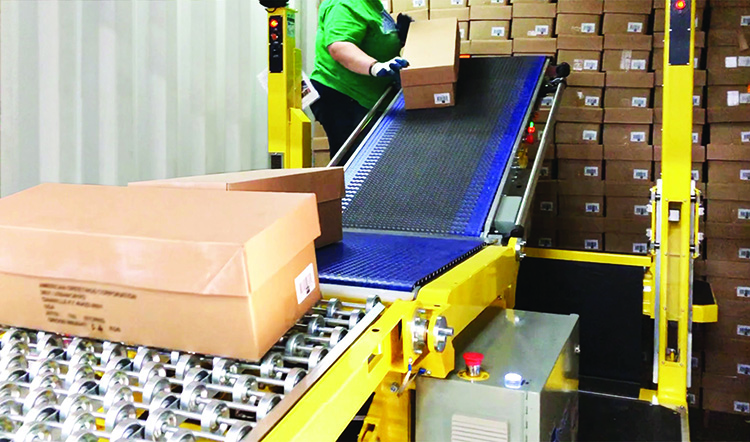
“These devices utilize a platform that can raise the worker to the top of the container ceiling. They also lower the worker so that packages on the floor are easy to handle. Therefore, the conveyor may alleviate much of the need for reaching, bending, and turning,” he said.
Additionally, the conveyor itself can be moved in numerous planes to allow all movement to be more efficient and ergonomically correct, Beightol continued.
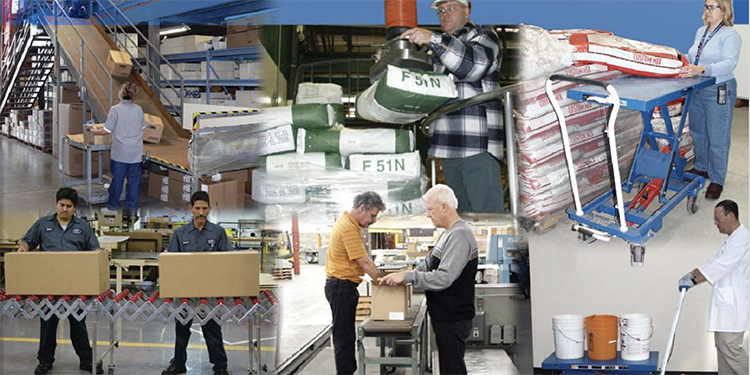
“In other areas of the warehouse, using lift tables and tilters can keep goods at optimal levels for handling,” he said. “Other ergonomic lifting solutions include intelligent lift assists and vacuum devices that ease strains associated with the job being performed.”
The Benefits of Ergonomic Material Handling and Warehousing
Implementing ergonomic improvements minimizes injuries—both immediate and chronic—as well as fatigue.
“Operators performing manual tasks might be able to outperform an operator using ergonomic equipment at the beginning of a shift. But what about at the end of the day? Or week?” asked Eder. “Ergonomic equipment enables consistent, repeatable performance from whichever workers are on the line.”
As an added, “hidden” benefit, implementing ergonomic material handling and warehousing equipment can expand a potential labor force.
“Rather than churning through the younger, more physically capable employees, anybody can lift loads with the right ergonomic equipment—regardless of age, sex, strength, or height,” Eder continued.
Additionally, utilizing ergonomic lifting equipment can help to preserve product integrity. Not every product’s packaging protects against drops or rough handling. Some products are also extremely valuable. In those cases, an ergonomic equipment manufacturer can incorporate special protection features, said Eder. “These include anti-drop, supervised lifting, and even inhibiting ‘grip’ unless the operator is in the proper location.”
Beightol agreed, noting that companies should work in conjunction with manufacturers and distributors of ergonomic systems.
“This allows an operation to provide a safe work environment that is simultaneously as efficient as possible because the solution is based on the exact activity being performed,” he said. “At times, standard equipment like a portable ergonomic conveyor or lift table may fit the needs. However, at other times, all parties must work together to essentially build the system around the job. This is especially true where special tooling, rotation of goods, or strict range of motion requirements exist.”
Get More Ergonomics Improvement Resources from the EASE Council
For organizations looking to enhance ergonomic material handling and warehousing, the first step is evaluating current workflows. Answer the following questions to uncover both quick wins and long-term opportunities:
- Where can manual lifting be reduced or eliminated?
- Which tasks involve repetitive or awkward movements?
- Does the layout support efficient, low-strain access to materials?
Both Beightol and Eder agreed that the most successful ergonomic material handling and warehousing solutions don’t just add equipment; they also rethink how work is performed. Ultimately, by applying the principles in the EASE Council’s Industrial Ergonomics 101, organizations can build safer, more efficient operations designed for long-term productivity.
Looking to add ergonomic equipment and processes to your workflows? Connect with the members of the Ergonomic Assist Systems & Equipment (EASE) Council. Additionally, the EASE Council offers a variety of resources—such as presentations and seminars, checklists, and ergonomic articles—on its website.