
Use Protective Guarding to Minimize Forklift Impacts and Protect What Matters Most
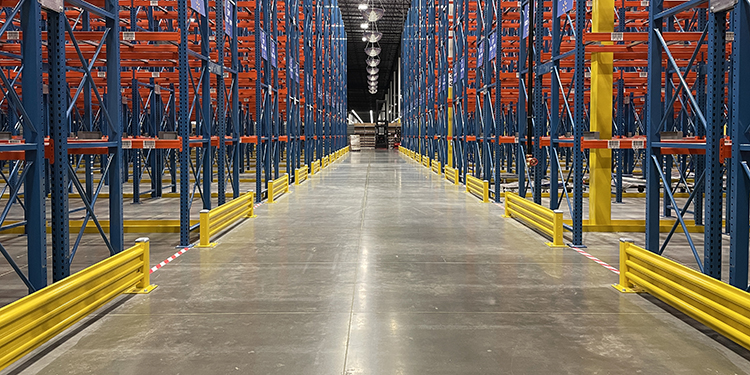
In busy warehouses and manufacturing facilities, movement never stops. Lift trucks turn corners, trucks back into docks, pedestrians cross aisles, and equipment operates at a fast pace. That constant motion keeps operations productive. But it also creates risk from potential forklift impacts.
According to Ryan Wachsmuth, Southeast Regional Sales Manager at Steel King Industries — a member of the Protective Guarding Manufacturers Association (ProGMA) — most forklift-related damage occurs in a predictable zone.
“Typically we see damage in the lower 48 to 60 inches of racking, columns, walls, or equipment,” he explained. “That’s where the body of the vehicle, its forks, or the load it carries are most likely to interact products, people, or equipment.”
For that reason, several protective guarding solutions intended to minimize forklift impact damage focus on that area.
Where Forklift Impacts Happen Most Often
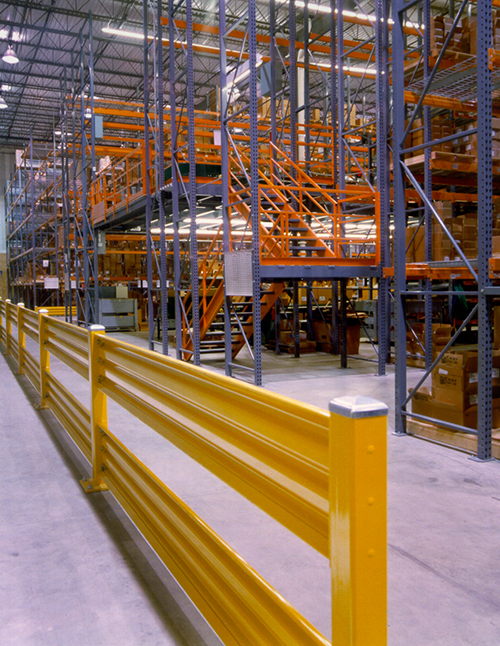 Although viral videos might lead you to believe otherwise, most forklift impacts aren’t dramatic, high-level collisions. They’re everyday contact at ground level, said Wachsmuth.
“The highest risk areas for forklift impacts include rack uprights at aisle end and building columns near tight turns,” he noted. “Also, anywhere associates or personnel may be — like workstations, inside modular office structures or on elevated platforms, or in pedestrian walkways — are also important spots to protect.
Many lift truck strikes occur in transition zones characterized by limited visibility or where equipment frequently changes direction. Aisle ends, intersections, and staging areas tend to see repeated forklift impacts over time.
Causes vary, continued Wachsmuth. “Operators may be working quickly or distracted. Traffic patterns may intersect. The facility’s layout may result in tight turning radiuses,” he said. “However, vehicle impacts are often unavoidable, particularly in high volume and high throughput operations. Even small, repeated forklift impacts can weaken structural components, increasing long-term risk.”
Wachsmuth recommends facility operators to be proactive. “Best practice is to anticipate forklift damage and safeguard against it with protective guarding rather than waiting to react until after an impact occurs,” he advised.
Protecting Rack from Forklift Impacts
Pallet rack is often one of the largest capital investments in a warehouse. It’s also equipment that lift trucks interface with frequently. Rack columns at the end of aisles — where traffic is highest — are at the highest risk of impacts. Over time, repeated forklift impacts can compromise load capacity and increase the likelihood of rack failure.
Installing properly engineered guarding helps extend the life of storage systems. Guarding also reduces repair costs and operational downtime caused by forklift impacts. A variety of protective guarding solutions exist to protect racking. These include column protectors, end-of-aisle guardrails, bumpers, bollards and more. Each helps absorb the forces of a vehicle strike before they reach structural components.
A key best practice is ensuring that protective guarding is installed independent of the rack structure, advised Wachsmuth. “When the guard stands apart from the racking, the force of forklift impacts transfers to the guarding instead of the upright,” he explained. “That keeps the system safe while also simplifying inspection and maintenance.”
Protective Guarding Creates Safer Pedestrian Zones
Pedestrian protection should always be a priority, particularly in high-traffic areas where people and forklifts both travel. While painted walkways may define space, steel guardrails or flexible polymer barriers create physical separation between people and mobile equipment.
In travel zones, installing continuous guardrail along walking paths can shield pedestrians. These systems help guide foot traffic while creating a visible and physical boundary that reinforces safe behavior. They also improve confidence among employees who regularly move through busy operational areas where forklift impacts could otherwise occur.
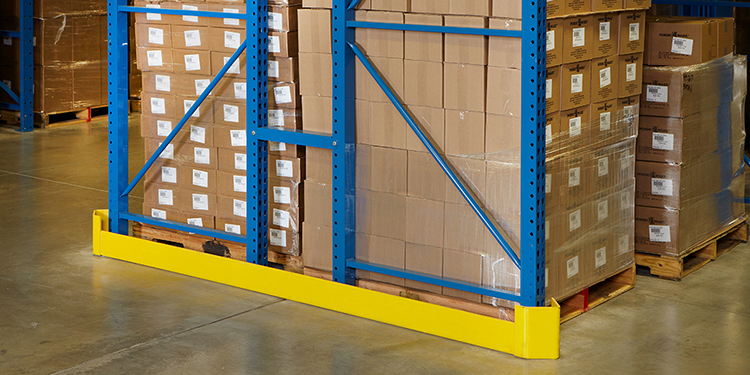
Ground-level protection is equally important for reducing forklift impacts. Forks can slide beneath guardrails and strike equipment or people behind them. To prevent this, steel or polymer curb barriers installed at floor level help prevent fork penetration and reduce low-level forklift impacts. These low-profile barriers are especially effective in mixed-use areas where vehicle and foot traffic intersect.
In facilities with pallet flow or staging lanes, curb barriers also help protect product stored near travel paths from forklift impacts, added Wachsmuth.
“In mixed-use environments, painted lines alone are rarely enough,” he explained. “Physical barriers provide a much stronger layer of defense against low-level forklift impacts. They also reduce the likelihood of accidental intrusion into restricted spaces.”
Shield Building Structures and Equipment with Guarding
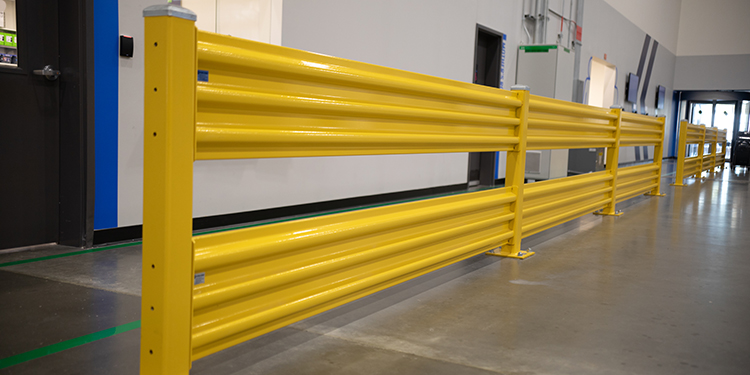
Beyond racking, facilities must also consider protecting building structures and fixed equipment from forklift impacts. This includes pick modules, elevated work platforms, building columns, workstations, equipment and machinery, and modular offices. Perimeter guard systems create a protective buffer around these structures.
Without protection, even minor impacts can dent wall panels, damage structural columns, or compromise modular office frames. Over time, repairs add up and may interrupt operations. Installing guardrails or bollards around vulnerable structures helps absorb forklift impacts before they reach the building itself. Whether an operation owns or leases its facility, preventing structural damage caused by vehicles helps avoid expensive repairs.
Improve Forklift Safety at the Loading Dock
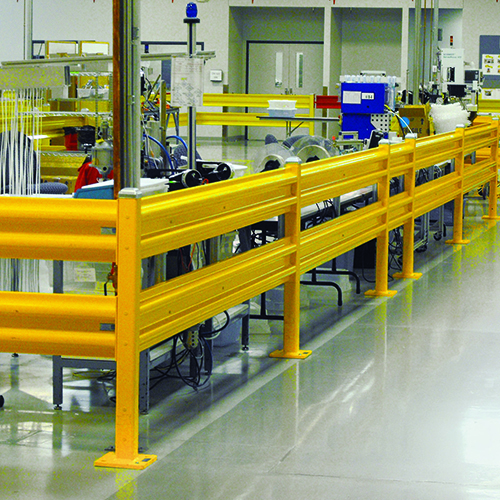
Loading dock areas are among the busiest and most hazardous spaces in a facility. Forklifts, trucks, and pedestrians converge in a confined area, increasing the likelihood of impacts and falls. Structural steel or polymer dock guards, bollards, wheel guides, and gates help reduce building damage and protect employees.
Properly positioned guarding can prevent lift trucks from striking overhead door tracks and reduce damage associated with forklift collisions near dock equipment. In addition, pivoting or swing gates at open ledges create a barrier when trailers are not present. These measures significantly reduce fall hazards for both personnel and vehicles working on elevated docks.
Select Guarding Designed and Tested to Withstand Forklift Impacts
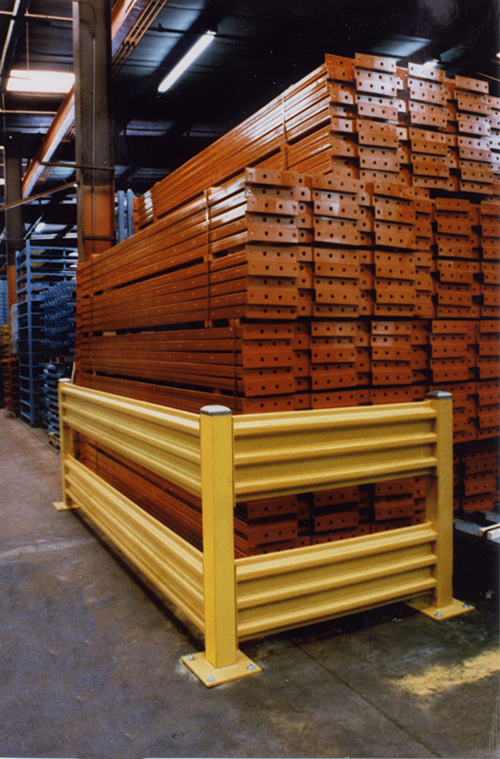
Effective guarding is not just about strength. It’s also about design that withstands forklift impacts. Rounded corners, proper height relative to forklift bodies, correct anchoring, and appropriate material thickness all play a role in reducing injury risk and improving performance under forklift impacts, noted Wachsmuth.
“Well-designed systems absorb and redirect energy rather than transferring it into structural components,” he said. “That helps minimize long-term damage.”
Guarding must also match the equipment used in the facility, he continued. “Larger forklifts generate more force in an impact, so they require appropriately sized and engineered protection. Selecting products tested to recognized performance standards ensures that barriers will withstand forklift impacts under real-world conditions.”
Cost differences between guarding products often reflect material weight, engineering, and compliance with industry standards. “Choosing protective guarding solutions aligned with ANSI standards provides confidence that products have been objectively tested rather than simply fabricated to appear robust,” added Wachsmuth.
ProGMA develops and publishes three such standards:
- ANSI MH31.1 addresses steel mesh containment panels designed to minimize falling objects from rack systems.
- ANSI MH31.2 establishes testing and performance requirements for guardrail systems engineered to absorb forklift impacts.
- ANSI MH31.3 sets criteria for topple barriers used in industrial environments.
“Referencing these standards during specification and procurement allows facilities to move beyond price comparisons and focus on long-term protection,” noted Wachsmuth.
Prioritize High-Risk Areas
Most facilities budgets don’t permit the installation of protective guarding everywhere at once. That makes prioritization essential when addressing forklift impacts. Wachsmuth advised focusing on high-traffic intersections, aisle ends, pedestrian pathways, dock perimeters, and areas already showing dents and damage first.
“Simply conducting a walk-through assessment can reveal patterns of repeated forklift damage,” he explained. “Maintenance records and visual inspections often highlight the most vulnerable areas. Focusing first on these high-risk zones delivers the greatest immediate return on investment in forklift impact prevention.”
More Resources for Protective Guarding
Looking for more ways to safeguard your operation’s people and assets? The members of ProGMA offer multiple resources and educational information about safety solutions. These include a Protective Guarding Search Tool, a list of frequently asked questions (FAQs), case studies, and more.